A topology-aware causal observability fusion pipeline diagnosing failures when telemetry is degraded or clock domains are loose.
A deep breakdown of custom features, protocols, and mechanisms.
Builds real-time directed acyclic graphs (DAGs) of telemetry events using structural causal models to isolate root causes instantly.
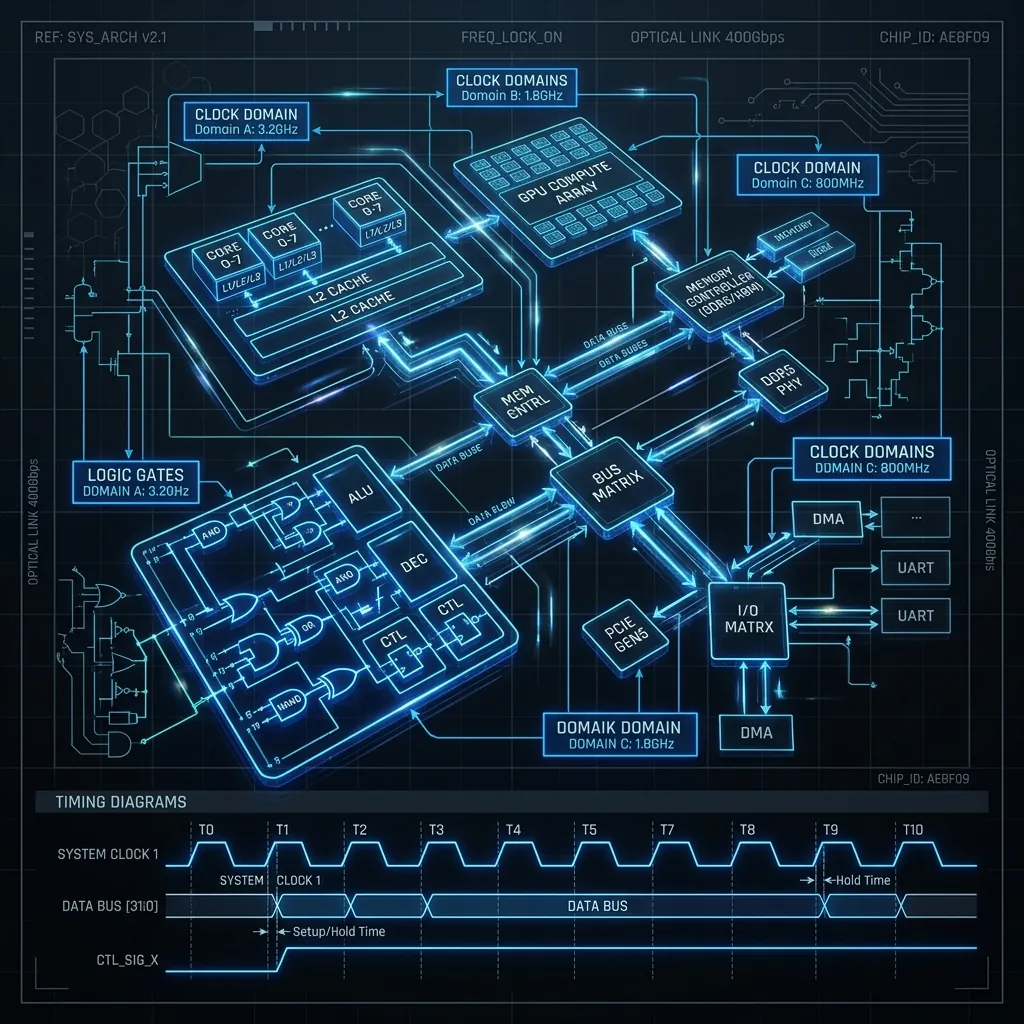
Mathematical modeling and drift compensation algorithms aligning clock drift across loose network nodes and microsecond domains.
Real-time hypervisor-level capture of network frames and system calls without introducing kernel or tracing overhead.
Project Chronos resolves the most complex challenges of modern microservice observability: isolating failures in highly asynchronous architectures where telemetry is degraded, clock sync is loose, and network events arrive out of order.
When logging across distributed systems, differing system clocks make temporal ordering unreliable. Chronos implements a custom drift compensation algorithm that estimates relative clock skew and offset dynamically from network packet round-trip exchanges.
By mapping loose timestamps to a unified virtual time domain, the engine reconstructs the exact sequence of events, ensuring database updates, API responses, and message queue transactions align correctly across services.
Chronos moves beyond basic anomaly detection. The engine builds a real-time, topology-aware Causal Inference Graph that outlines system call paths, database queries, and microservice exchanges.
By applying structural causal models, the system can distinguish between mere correlation (e.g. high CPU on server B) and true root causation (e.g. database lock on database A starving server B). This speeds up outage diagnostics from hours to milliseconds.